The Role of Outdoor Provision in the DfE Excellence in Reception Teaching Framework (June 2026)
Reception is a vital foundation year that supports children’s future success.
The recently published DfE’s Excellence in Reception Teaching Framework supports teachers’ professional development through evidence-informed guidance and reflection, helping to strengthen practice and ensure every child receives the best possible start to their education.
Effective practice requires a strong understanding of child development and Reception pedagogy.
Reception teachers play a crucial role in introducing children to school life, building partnerships with families, supporting smooth transitions from early years settings, and adapting teaching to meet the needs of all learners, including those with SEND.
The School Playground Company have extrapolated the key implications relating to outdoor provision, outdoor play, physical development, and the use of outdoor space from the Excellence in Reception Teaching Framework.
We hope you find the information useful.
Key Policy and Practice Messages
Outdoor provision is viewed as an essential part of learning, not an optional add-on
The framework consistently positions outdoor environments as a core component of high-quality Reception practice. Children should have access to environments that enable exploration, engagement, independence, and physical development. The document emphasises that children learn and develop best in “enabling environments” that respond to their interests and needs.
Outdoor play should be frequent and purposeful
One of the strongest statements in the framework states that Reception teachers should:
“Promote and create plentiful opportunities for indoor and outdoor play and learning”
The framework further specifies that this provision should:
Balance adult-directed activities with child-initiated play.
Ensure children engage in regular physical activity.
Be integrated into learning rather than treated separately from the curriculum.
Key Facts About Outdoor Play
Outdoor play supports physical development
The framework explicitly states:
“Physical development in the early years is essential for health, confidence and learning.”
It also highlights that:
“Physical development approaches may benefit children’s cognitive development and support attention, thinking, communication and emotional well-being.”
This links outdoor play directly to:
Cognitive development
Attention and concentration
Communication and language
Emotional wellbeing
Confidence
….rather than simply physical fitness.
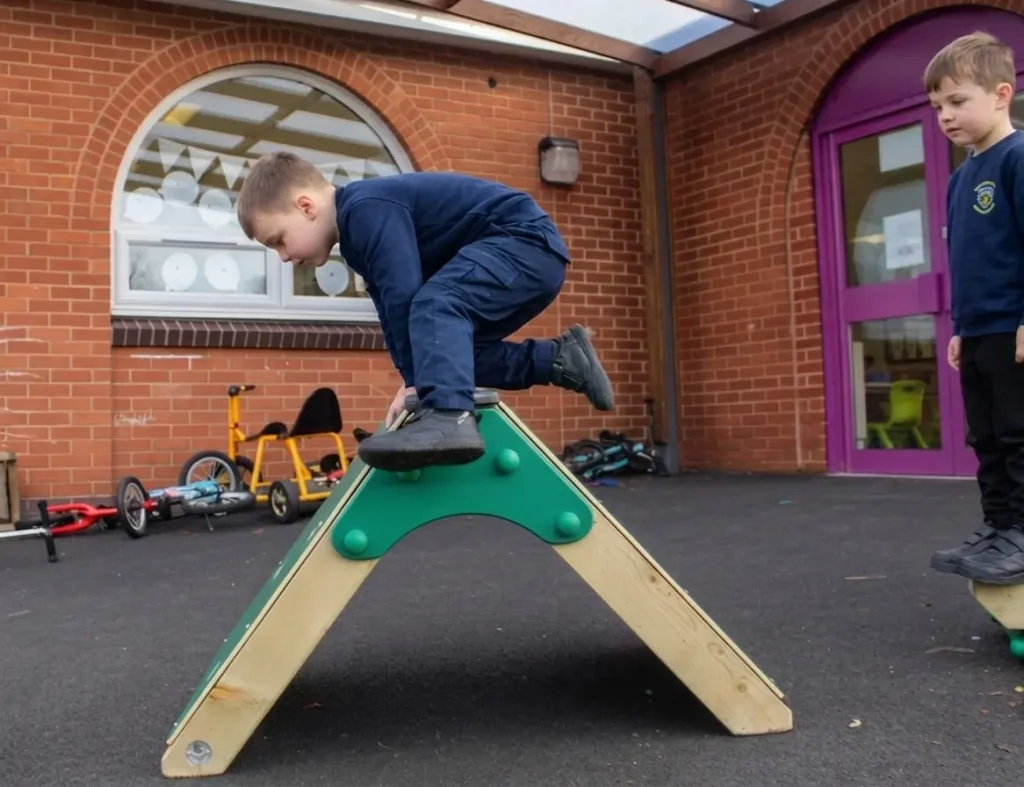
Outdoor spaces should develop gross motor skills
The framework expects Reception teachers to provide: “frequent and varied opportunities to support children’s gross motor development” through purposeful indoor and outdoor physical activities.
Outdoor provision should therefore support:
Core stability
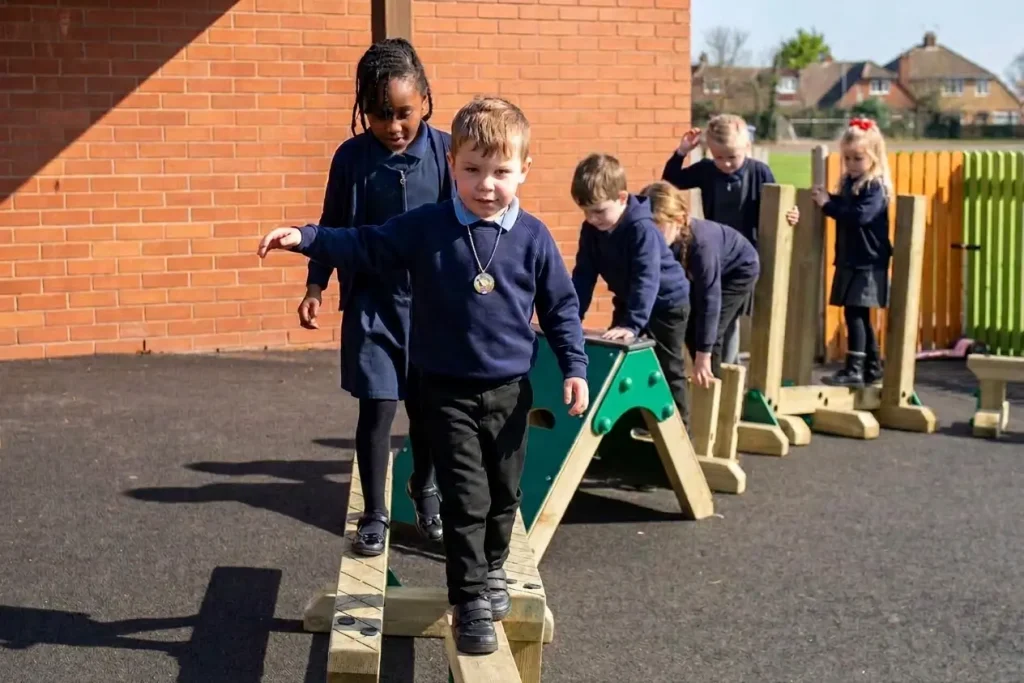
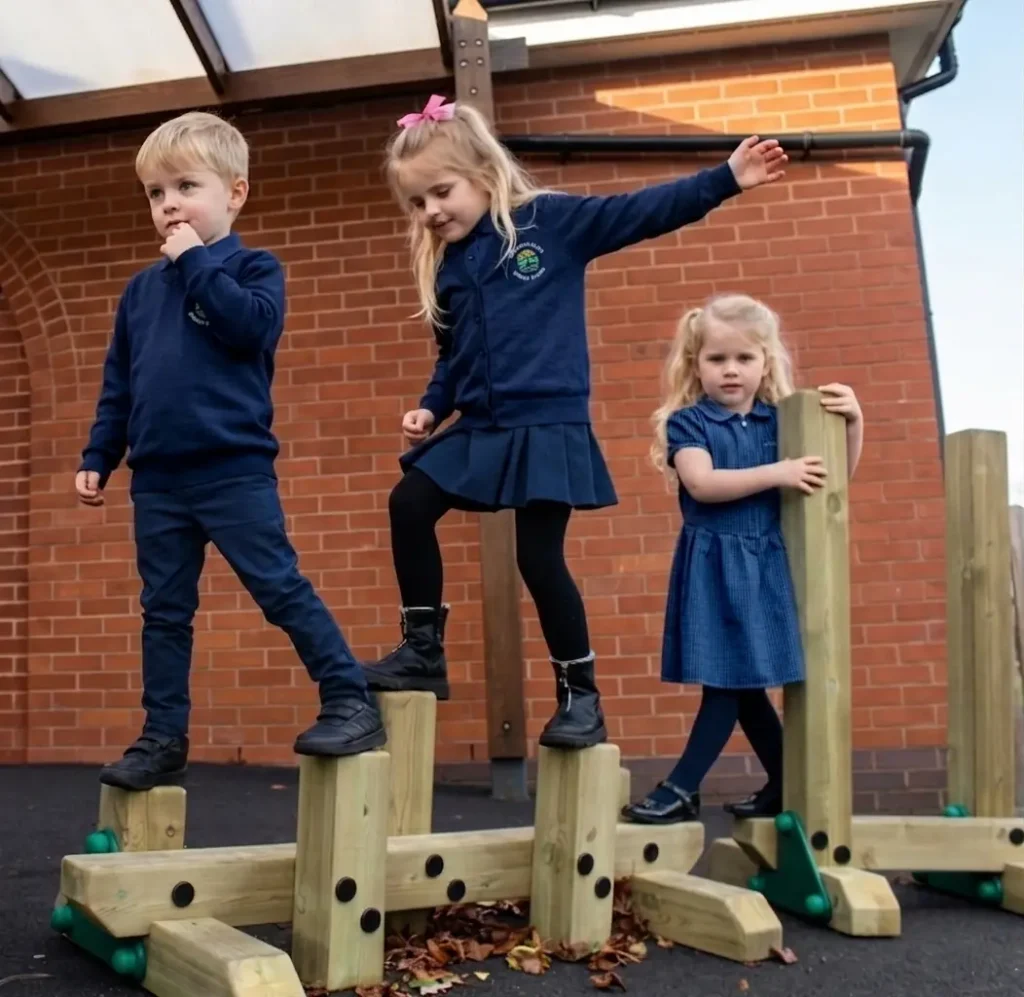
Balance
Coordination
Whole-body control
Fundamental movement skills
Expectations for Outdoor Environments
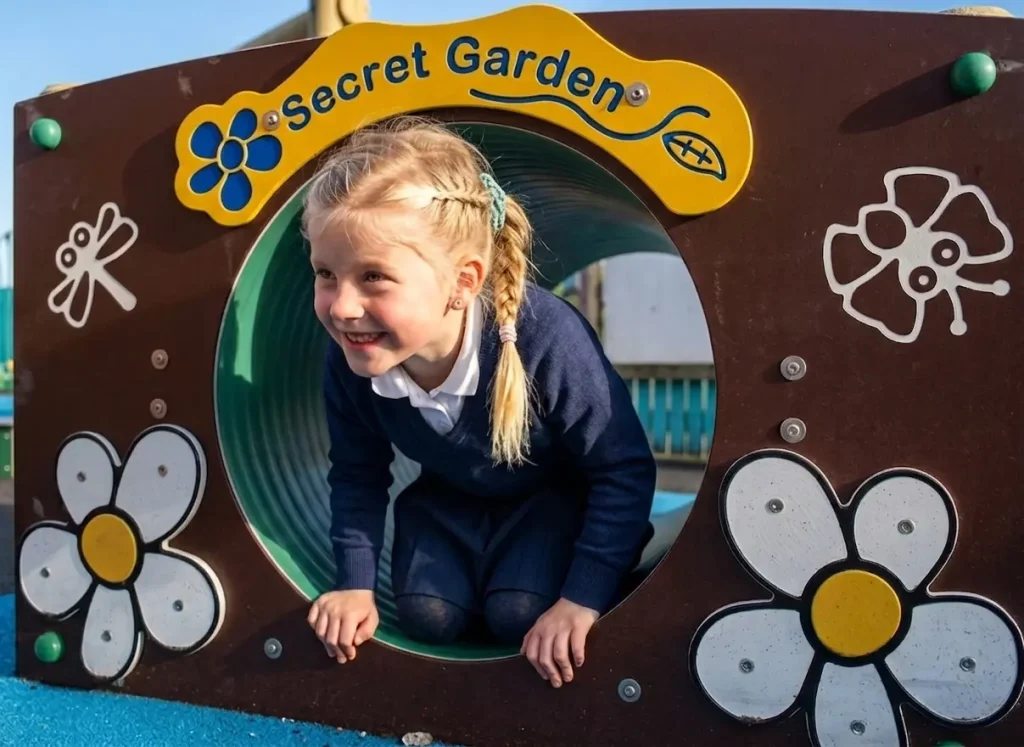
Outdoor environments should encourage exploration
The framework identifies one of the characteristics of effective learning as:
“Playing and exploring – children investigate and experience things, and ‘have a go’.”
Outdoor spaces should therefore provide opportunities for:
Investigation
Experimentation
Risk-taking within safe boundaries
Independent exploration
First-hand experiences
Outdoor spaces should support engagement and self-regulation
Teachers are expected to:
“Create environments, routines and interactions that promote engagement, understanding, attention and self-regulation.”
This applies to all environment’s children access, including outdoor spaces.
Outdoor areas should feel safe and secure
The framework emphasises that children develop best when adults create environments in which they feel:
“safe and secure to interact with others, explore their environments and access opportunities.”
This suggests outdoor provision should be:
Welcoming
Predictable
Well organised
Accessible
Emotionally safe
Continuous Provision and Outdoor Learning
Although not explicitly labelled “outdoor provision”, the classroom practice section contains principles that strongly apply to outdoor environments.
Teachers should:
“Design continuous provision that offers open-ended, meaningful and appropriately challenging opportunities across all areas of learning.”
They should also:
“Plan environments that encourage children to revisit experiences, test ideas, solve problems, collaborate and engage in sustained periods of involvement.”
Implications for outdoor areas include:
Open-ended resources
Opportunities for problem-solving
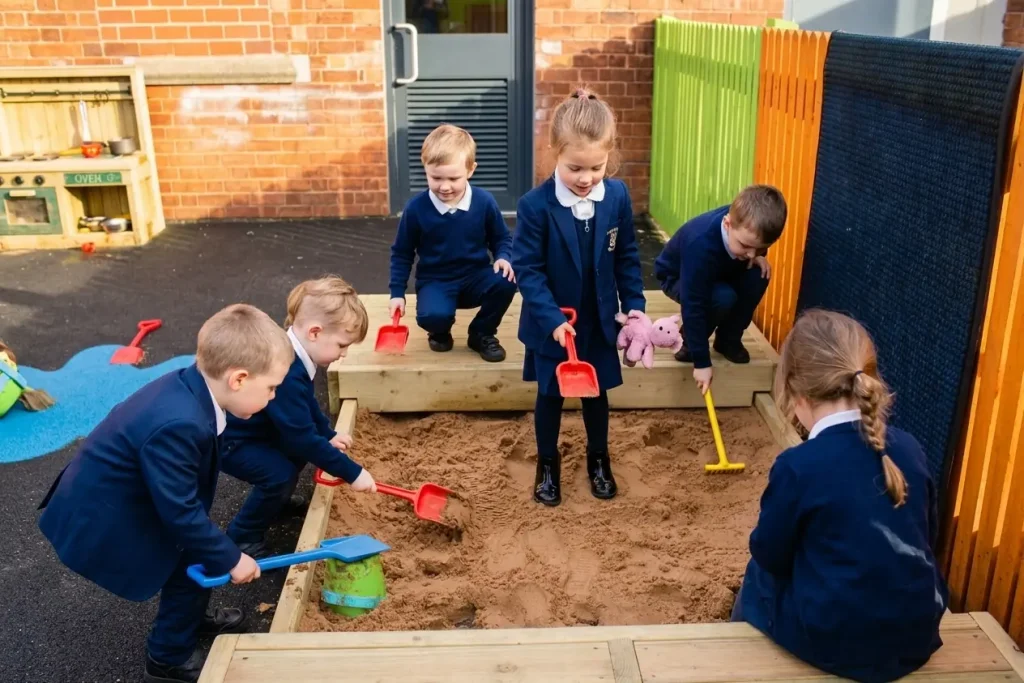
Collaborative play experiences
Investigation and experimentation
Repeated access to develop deeper learning
Inclusion and Outdoor Space
The framework highlights that:
“A predictable and secure environment benefits all children but is particularly valuable for many children with SEND.”
It also notes that practitioners should:
“ensure barriers such as sensory differences are well understood” and adapt “the curriculum and environment”
accordingly.
Importantly, the framework acknowledges:
“One environment will not be optimal for all children.”
For outdoor provision this suggests:
Sensory considerations are important.
Different outdoor zones may be needed.
Some children may require quieter or adapted outdoor spaces.
Outdoor provision should support regulation and accessibility
Key Take-Aways
The framework presents outdoor provision as a fundamental element of Reception pedagogy.
Outdoor spaces are expected to support physical development, communication, self-regulation, exploration, inclusion, problem-solving, and sustained play.
The strongest recurring message is that high-quality Reception practice should provide plentiful, purposeful, and developmentally appropriate outdoor play and learning opportunities that are integrated into the curriculum and accessible to all children.
Next Steps
Schools are busy places. Teachers are busy people. If your school is considering investing in its outdoor space, The School Playground Company can offer you advice and guidance gained from working closely with schools across the country. Realise your ambitions through our free and without obligation support. We would be delighted to work with you.